
Final Rating: 3.5/5
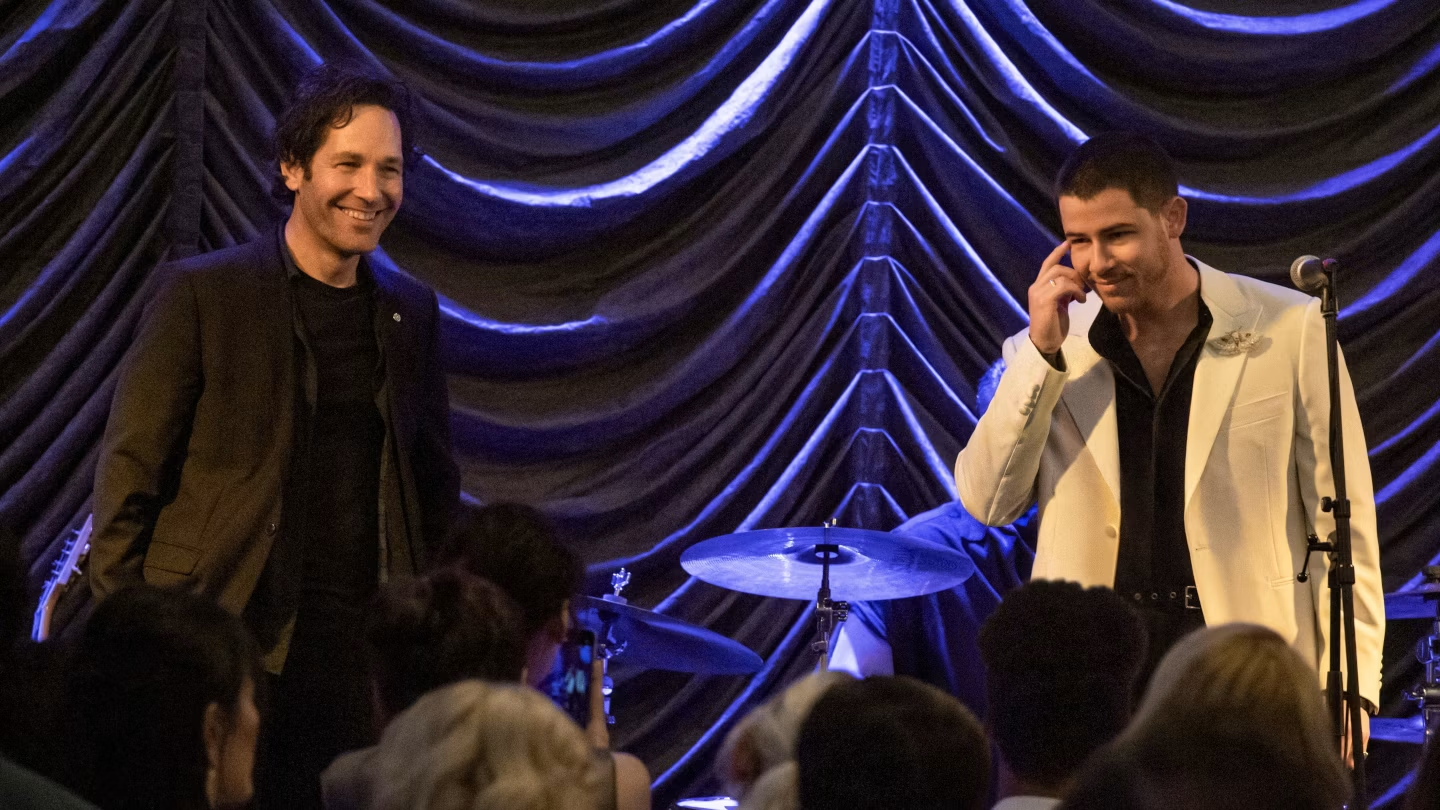
In Power Ballad, Paul Rudd plays Rick Power, a retired rockstar turned wedding singer whose life begins to unravel when one of his songs is stolen by popstar Dan Wilson (Nick Jonas). Unable to convince the people around him that Wilson’s number one hit is actually his, Power tirelessly pursues Wilson in hopes of a songwriting credit, or even some acknowledgement that he didn’t imagine everything.
His ninth feature, Ballad doesn’t see director John Carney pushing the envelope much. It’s a musical comedy featuring big names singing catchy original tunes by Carney and frequent collaborator Gary Clark, which uses a fun, straightforward premise as a Trojan horse for sentimentality. While there’s nothing new, Carney has become exceedingly efficient at making this type of movie.
At the start of the film, both are formerly successful musicians whose stars have dimmed. Power has resigned himself to singing covers in a wedding band to pay bills, despite computers full of unfinished demos. Wilson faces pressure from his record label to make a hit album or fade into obscurity.
Even after Wilson gets his hit song, the two continue to mirror each other. Power’s obsession with the song alienates him from his band and his family. Wilson’s sudden success results in him retreating into his work and separating from his girlfriend. In effect, the song takes over both of their lives. It also makes one of them rich, so his choices seem more like choices.
Rudd is perfectly cast as Power. His performance is grounded: funny but not ha-ha funny; impulsive but not unhinged. He delivers the more poignant speeches of the film with sincerity, getting a few great monologues on the joy of being a father and the power of music. It’s sappy stuff, but Carney’s words coming out of Rudd’s mouth sell the whole thing as genuine.

With significantly less screentime than his co-star, Jonas delivers just as good of a performance. Rather than sappiness, Jonas brings a palpable insecurity to the character of Wilson. Through his interactions with Power, his manager, and even his girlfriend, it’s clear that Wilson doesn’t think much of his own songwriting. He never seems to think his success is earned, and the most tragic aspect is that to the end, Power is ironically the only one who believes in him.
Carney’s greatest strength is in smuggling heart into the story. At no point does Power’s life seem glamorous, while there’s no point at which Wilson’s doesn’t. Yet Wilson’s success seems fleeting. His main friend is his manager Mac (Jack Reynor), who is only ever seen berating him. Havana Rose Liu delivers a warm performance as his girlfriend, Marcia, who is unceremoniously dumped the moment Wilson finally scores a hit.
Power’s success is modest by comparison – hardly counts as “success,” really – and yet the relationships between Power and his wife Rachel (Marcella Plunkett), daughter Aja (Beth Fallon), and best friend Sandy (Peter McDonald) form the heart of the film. In Power’s quest for attribution, he’s repeatedly forced to justify himself to those close to him, and in doing so contend with what “success” would actually mean for him. Would he be happier if he could play Madison Square Garden, or was the real prize the friends and family he made along the way?


