
Final Rating: 4.5/5
4K UHD Recommendation: Recommend

Back in 1970, Judy Blume published the seminal novel, “Are You There God? It’s Me, Margaret.” to great acclaim. It is a celebrated work that still resonates today as it deals with the cusp of time between being a child and becoming a preteen for girls. The subject matter, which was utterly revolutionary at the time, spoke plainly about menstruating for the first time, buying a bra, first crushes and other issues that young girls deal with.
For decades Blume refused to give the rights up for adaptation, believing that the pitches received wouldn’t do the story and characters justice. It took until director Kelly Fremon Craig and producer James L. Brooks approached Blume with a faithful adaptation that also expanded the role of the mother for her to get on board. It makes perfect sense that Craig would be the one to get approval, as her debut film The Edge of Seventeen might be one of the most honest and realistic portrayals of being a teen girl put to screen.
In Are You There God? It’s Me, Margaret., 11 year old Margaret Simon (Abby Ryder Fortson) is starting at a new school after her family moves from New York City to the suburbs of New Jersey. Ostensibly the plot is about a year long school project where Margaret is to write about where she stands with religion, as her mother is Christian and father is Jewish but they raised her in a secular household. The title of the film and book come from Margaret attempting to pray and beginning each time with the phrase “Are you there God? It’s me, Margaret”, speaking to the deity as if they were an unresponsive therapist.
After moving to her new neighborhood, prepubescent Margaret joins a friend group that consists of Nancy (Elle Graham), Gretchen (Katherine Mallen Kupferer) and Janie (Amari Alexis Price), three girls who talk about boys they like, wear bras and discuss when they will get their impending first period, all things that haven’t even crossed Margaret’s mind. This sets her off on a coming of age journey where she learns who she is as a person and her relationship with her friends, family and religion.
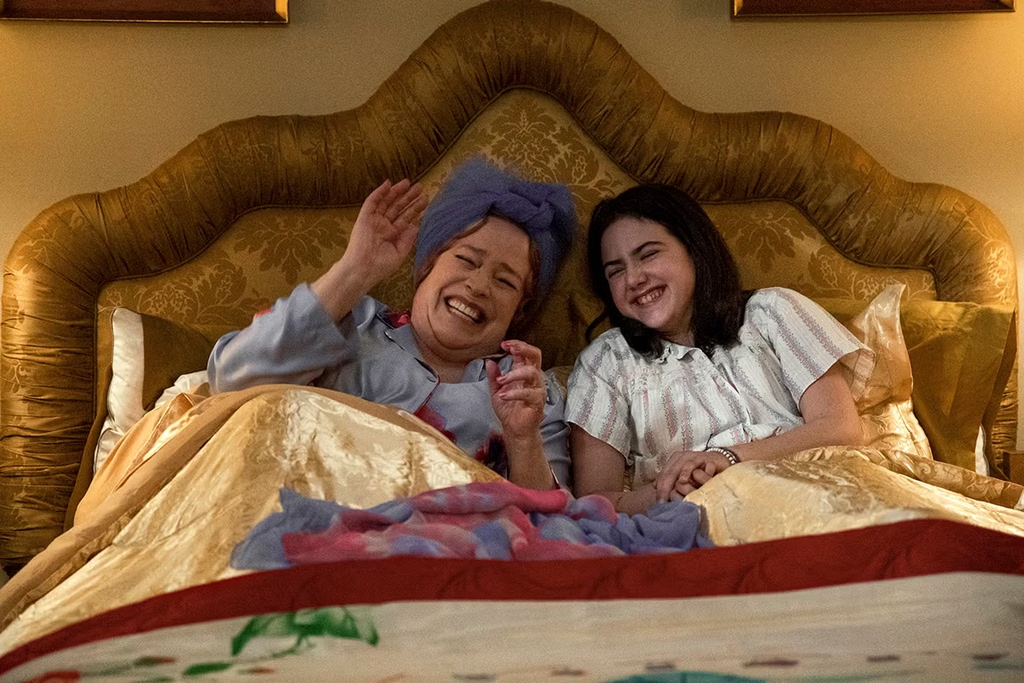
The film could only work with a grounded realistic portrayal of Margaret, and Ryder Fortson fits into the part effortlessly. She’s smart and inquisitive with a great understanding of the weight that character brings. Between blushful glances at neighborhood crush Moose (Aidan Wojtak-Hissong), embarrassing moments when her mom questions why she needs a bra and the anger and frustrations she feels when she realizes her new friend Nancy might not be the nicest person, she shows off a ton of range.
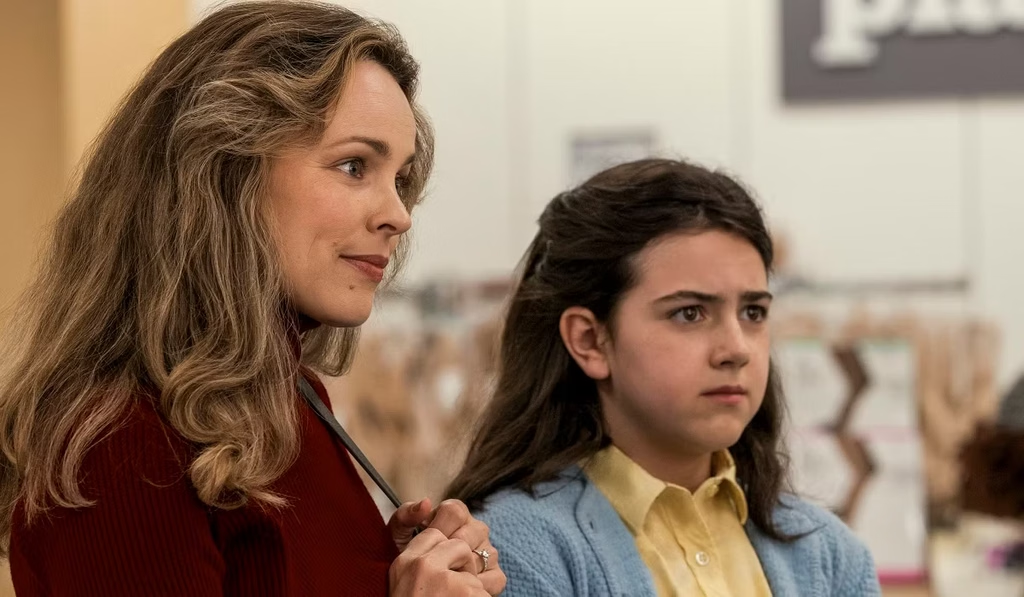
But what elevates this film from good to great is the three generations of female performances of Margaret, her mother Barbara (Rachel McAdams) and paternal grandmother Sylvia (Kathy Bates). These three women combine to make something truly special and will leave a lasting legacy for this film to live on as a how-to guide on growing up.
Barbara is a mother everyone wishes they had growing up. She’s easy to talk to, respectful, patient and understanding. She lets Margaret make mistakes she will learn from as she herself is processing the concept of her child growing up and not needing her as much. She’s matched by Sylvia, who despite turning the Jewish guilt setting to high, is never afraid of being honest and always is proud of her growing granddaughter.
McAdams and Bates are already known as gifted comedic (and dramatic) performers, but Craig has the wherewithal to not overwrite her scenes, instead allowing the masterful actors to let their faces tell some of the most important moments. A gasp, a smirk, choking back tears and more elevates the material from potentially lecturing to empowering and memorable.

If there is a drawback, it unfortunately comes from Benny Safdie’s performance as Margaret’s father Herb. The almost decade age gap between him and McAdams shows as they do not look like a couple and his youthfulness makes it hard to see him as a fatherly figure. Despite strong performances in films like Good Time and Licorice Pizza, he is ultimately miscast here.
The 4K UHD release is packed full of features, and since the film is set in 1970 there are plenty of featurettes about set and costume design to make it period accurate with the different heads of departments talking about their process of research and crafting authentic looks.
There are two brief deleted scenes, one where Margaret reveals to her grandmother that she is wearing a bra in public and another where Margaret stuffs her bra with cotton balls before going out. They were likely trimmed for timing reasons, but provide good chuckles in both.
A big emphasis in all of the features was having Blume’s blessing and involvement in the making of the film. She is present in nearly all the bonus content giving context to the setting with Craig and Brooks often emphasising wanting to stay true to the source material as much as possible.
Some of the features get a bit repetitive, with the same cast and crew members interviewed in each of them not always bringing new information each time and some clips reused in multiple bits.
The film threads a delicate balance of not shying away from touchy subject matters regarding anatomy, biological developments and other awkward moments young people go through, but Craig deftly handles everything in a way that is authentic and real without ever feeling exploitative or leering.
Are You There God? It’s Me, Margaret. will go down as coming-of-age film for the ages. It’s whip smart, belly laugh inducing hilarious and is educational without ever being preachy. It will be required viewing for all young girls (and boys too) just like the original source material is still required reading.
Thank you Allied Vaughn and Movie Zyng for the screener.
Buy your copy of Are You There God? It’s Me, Margaret. here: https://moviezyng.com/zbiwzh


