

Final Rating: 3.5/5
Blu-Ray Recommendation: Recommend

Portrayals of homosexuality in Hollywood movies through the decades have taken many forms, especially during the thirty-plus years that the infamous Hays Code for self-censorship was in place. This meant that, under the direction of not displaying any kind of “sexual perversion”, gay characters could not explicitly be called out in any Hollywood film from the mid-30’s through to the late-60’s. This, however, didn’t mean that they weren’t there.
Writers, directors, and actors became very adept at finding ways for these characters to exist and be understood in the margins and subtle details. Vito Russo’s 1981 book The Celluloid Closet (along with an excellent 1996 documentary of the same name) does a great job of highlighting how these characters managed to make their way into even mainstream studio productions like The Maltese Falcon, Rope, Gilda, and countless others.
By the mid 1950’s, films like Rebel Without a Cause were presenting characters that struggled with having to prove their masculinity in the face of heartfelt emotion. This is the environment in which 1956’s Tea and Sympathy (directed by the great Vincente Minnelli) was released in, and the recent Warner Archive Collection Blu-ray marks the first time the film has been available in a high-definition format.
Tea and Sympathy is the film adaptation of Robert Anderson’s 1953 stage play, who was also brought in to write the screenplay. The three main actors from the original Broadway production were also cast for the film: John Kerr, as teenage student Tom at an all-boys boarding school, Deborah Kerr, as the headmaster’s wife Laura that lives at Tom’s boarding house, and Leif Erickson, as her husband Bill.
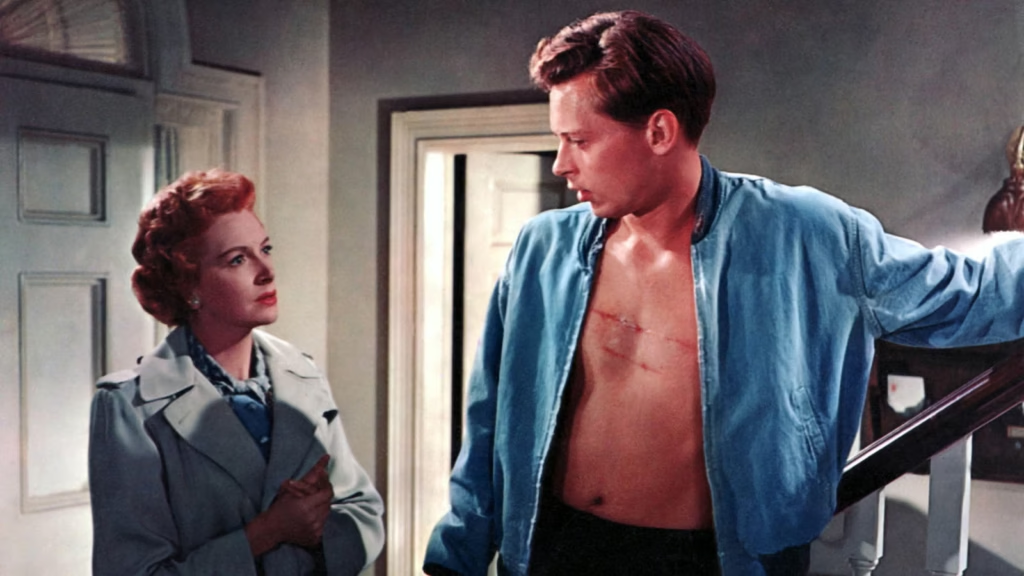
Tom, a sensitive young man that is more at home playing his guitar and listening to records alone than playing ball and hanging around with his classmates, has become ostracized and never feels like he fits in. After being seen with a few of the headmaster’s wives helping them sew a button onto a shirt, his classmates target him with the name “sister boy.” From this point, everything that Tom does is scrutinized under this same effeminate lens, right down to his choice of shots while playing tennis.
As the bullying intensifies, Laura (who has taken a shine to Tom’s sentimental nature) becomes more protective of him as most others seem to be content to let things play out to try and “make a man out of him.” At the same time, Bill has been increasingly more interested in school and extra curricular activities with his students than spending quality time with Laura.
The film is conflicting with itself in many ways because of this subject matter. The play made no bones about what the students were accusing Tom of; instead of being caught sewing, the play has Tom sunbathing with another male professor and the student outright calling him a homosexual. Even the term “sister boy” is a thinly veiled safer version of words that would have more likely been used.
Rather than harping on this aspect, the film does more in the way of questioning the very idea of masculinity and how it is shown. An early scene of many of the boys playing on the beach after class has them shirtless and sweating, giving echoes of the famous scene from a future hyper-masculine film in 1986’s Top Gun. There are a few instances in the film where the idea of perceiving the slightest mannerism or movement as unmasculine, along with the right rumour, could change how that person is seen by the others.

Bill and Laura’s marriage is also challenged when Laura calls him out for his emotional distance and spending far less time with her. It calls out the masculine ideal for the farce that it is, which is still eerily prescient in modern conversations of gender roles and male identity.
The film itself is expertly shot and crafted under the Technicolor mastery that Minnelli has shown in many of his other films. The presentation of the Warner Archive Blu-ray is vibrant, especially in showing of the greens and blues of the coastal New England spring and the more harrowing contrasts of a nighttime hazing scene with a tall roaring bonfire.
The film was only previously available through the manufacture-on-demand era of Warner Archive DVDs, and this new HD mastering job serves the film well. The special features on the disc are a bit slim but mimic the classic theatrical experience, as is the case with most Archive releases. The Tom & Jerry cartoon short Down Beat Bear is included and fits this experience given that both the feature film and short were properties of MGM at time of release in 1956.
The other feature on the disc is the film’s trailer, which interestingly does give a bit of insight into the delicate subject matter at play when making the film. As mentioned, several things in the film had to be changed from the original play to conform to the standards of the Hays Code. This includes a scene both at the beginning and end of the film, related to Tom returning to the school for a class reunion.
The theatrical trailer begins with a title card that reads, “Even the most daring story can be brought to the screen…when done with courage, honesty, and good taste.” The final words of that sentence do a lot of heavy lifting, and “good taste” mostly just means moral and palatable for the general public rather than honest or courageous.
That said, the film is an equally fascinating watch as a dramatic character study, a critical look at the fragility of masculinity, and a historical signpost of the portrayal of gay characters at that point in Hollywood. Minnelli, a person whose own sexuality seems to have been either fluid or repressed once he arrived in Hollywood, is likely the perfect person to have directed this film. This Warner Archive physical release gives new life to a film that previously was more talked about or referred to than actually seen.
Thank you Allied Vaughn and Movie Zyng for the screener.
Buy your copy of Tea and Sympathy here: https://moviezyng.com/f0yemi


